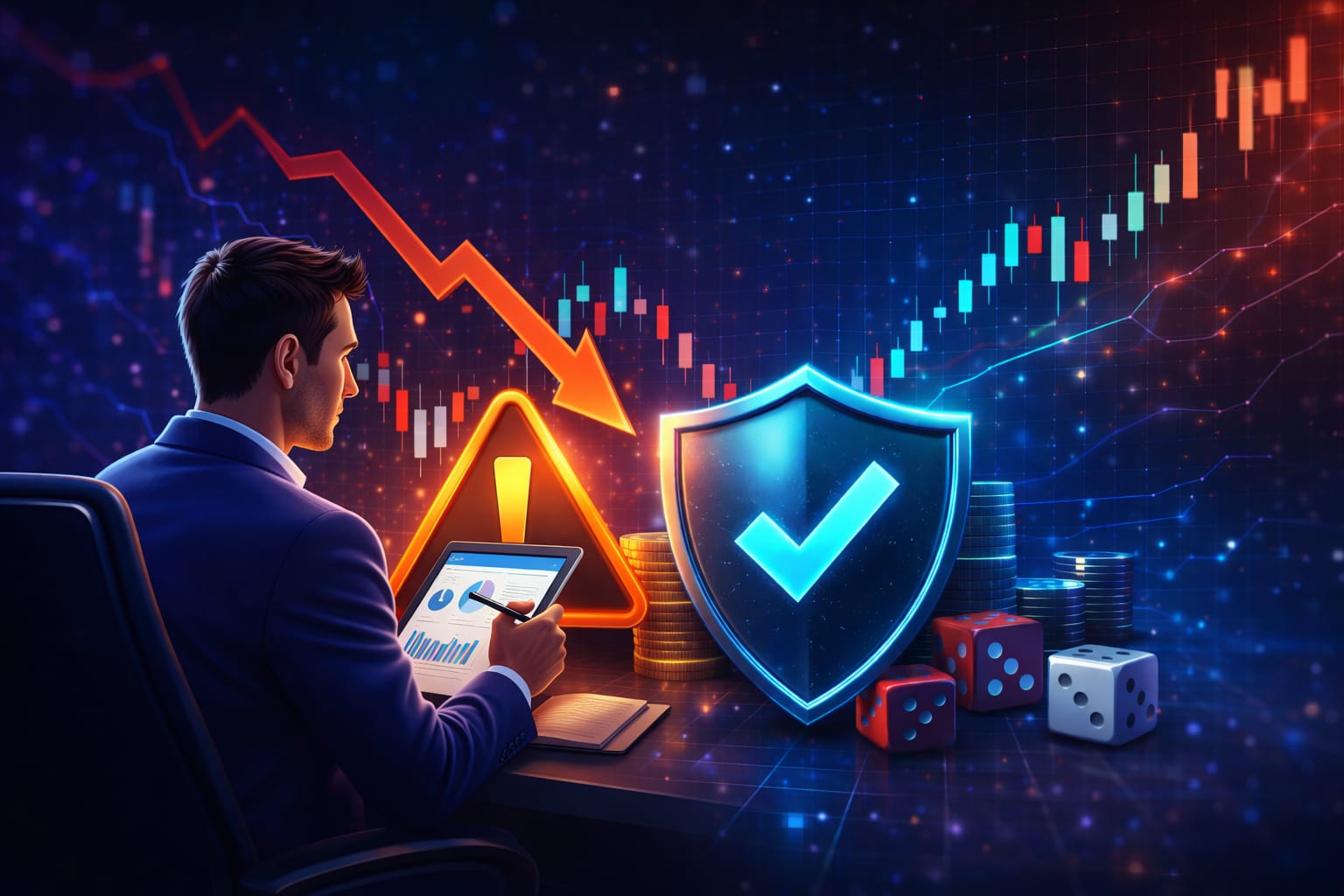
Anyone who begins investing should first reflect on one simple question: how much risk can you truly tolerate?
When losses begin to exceed your personal risk tolerance, the body reacts. The sympathetic nervous system activates the classic fight-or-flight response. At that point rational decision-making becomes difficult. Losses simply feel worse than gains of the same size feel good. Losing $1,000 hurts more than gaining $1,000 feels rewarding.
Because of this, one of the biggest challenges in investing is minimizing emotional decision-making. Emerging markets such as cryptocurrencies tend to amplify this effect even more, because volatility is high and narratives change quickly. The simplest way to reduce emotional pressure is straightforward: only invest an amount you are prepared to lose. For some people that may be $100. For others it may be $1,000 or $100,000.
From a risk management perspective the absolute number is not what matters. What matters is how large that amount is relative to your portfolio. This is one reason why many wealthy investors allocate only around 1–5% of their portfolio to cryptocurrencies and rebalance if that allocation grows too large.
Volatility and why it matters
Cryptocurrency markets are among the most volatile financial markets in the world. Bitcoin has historically experienced drawdowns of 70–80% during bear markets. Many smaller cryptocurrencies have dropped 90% or more during the same periods. This level of volatility means that position sizing becomes extremely important. Even strong long-term assets can experience large short-term losses.
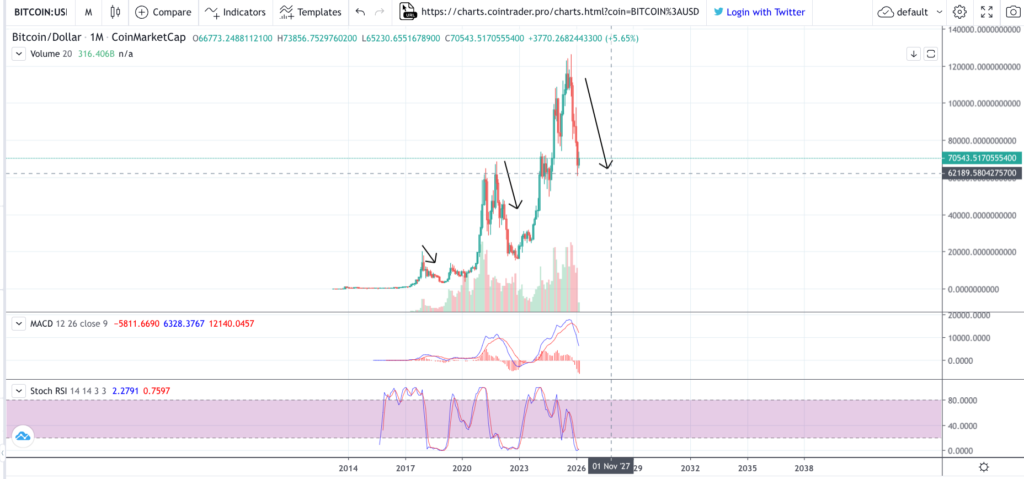
Without proper risk management, many investors are forced to sell at the worst possible moments simply because the size of their position became emotionally or financially unbearable. Understanding volatility is therefore a central part of risk management.
Lessons from betting markets
Before focusing on financial markets, I spent several years studying sports betting markets. One of the basic rules of bankroll management was simple. A single bet should represent only 1–2% of the total bankroll.
The reason is variance. Even profitable strategies experience losing streaks. If position sizes are too large, a bad run can wipe out the entire bankroll before the long-term edge has time to materialize. More advanced models use the Kelly Criterion, which adjusts the bet size based on the probability of success and the size of the edge. Even then, the recommended bet size rarely exceeds 5% of the bankroll, even when the perceived edge is large.
Despite having good strategies, many players still went bankrupt simply because they failed to manage risk properly. When variance turned against them, confidence disappeared. They started doubting their strategy, which led to worse decision-making. Uncertainty can be either an investor’s worst enemy or their best friend. It creates fear, but it also creates inefficiencies in markets.
Market overreactions
In one particular sports league, the margins between teams were extremely small. However, bookmakers and bettors often overreacted heavily to changes between seasons. The best oddsmakers can estimate probabilities with only a small margin of error. But when new information appeared, the market sometimes reacted too strongly. Those overreactions created opportunities. By betting against exaggerated moves in the odds, it was possible to find positive expected value situations.
How this logic applies to crypto
The same logic applies in cryptocurrency markets. When prices move into long-term price zones where historical data shows strong structural support, it can make sense to allocate a larger portion of a portfolio. When leverage across the market increases, liquidity tightens and downside risks grow, exposure should usually be reduced. Position sizing should adapt to market conditions. Simple in theory, but difficult in practice.
Position sizing and portfolio risk
One simple rule I personally follow is to avoid placing positions that exceed 10% of the total portfolio at a single entry point. Crypto markets are volatile and they constantly create new opportunities — both to enter positions and to take profits when prices move higher. Limiting the size of a single position preserves flexibility. If the market moves against the position, the damage to the portfolio remains manageable. If better opportunities appear later, there is still capital available to deploy.
It is important to clarify what this means. This does not mean that only 10% of a portfolio can be invested in crypto. It simply means that a single entry into a specific asset should not represent more than roughly 10% of the portfolio. Positions can be built gradually as the market reaches different price levels in assets you have chosen to follow.
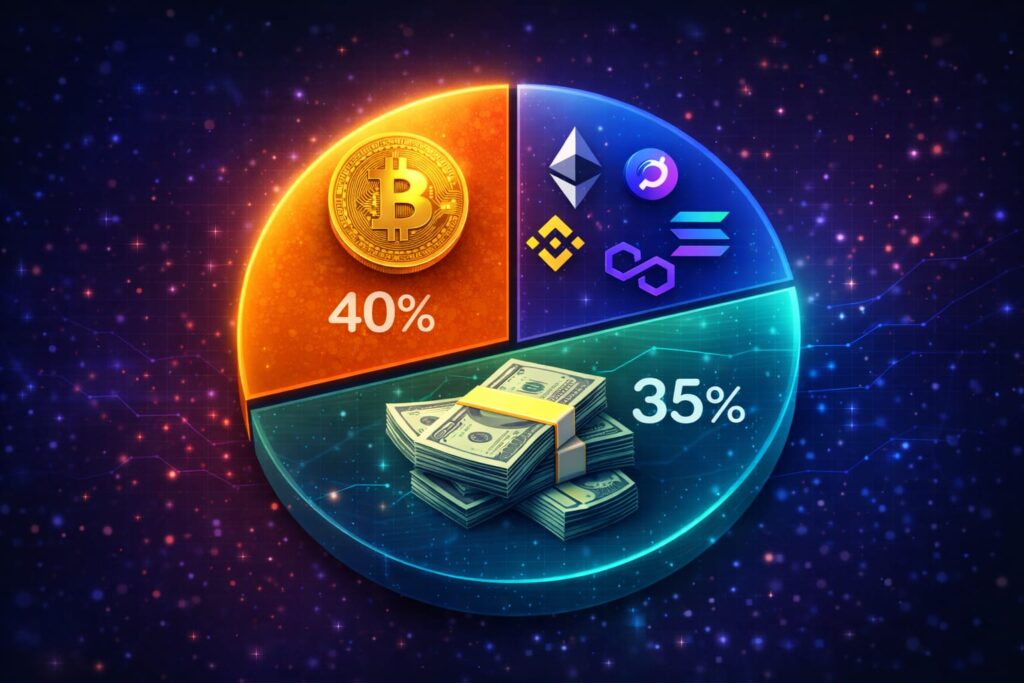
At the same time, I would avoid keeping 100% of a portfolio fully invested at all times. Markets move in cycles, and periods of high risk are followed by periods of better opportunity. Keeping some capital in reserve allows investors to act when those opportunities appear. Being fully invested all the time in highly volatile markets is often closer to gambling than investing.
Personally, my approach has always been to focus more on avoiding large losses than chasing the biggest possible gains. Protecting capital first and allowing profits to grow over time has proven to be a far more sustainable strategy than constantly trying to catch the largest moves in the market.
Leverage – the fastest way to destroy a portfolio
Another major risk factor in cryptocurrency markets is leverage. Leverage amplifies both gains and losses. While it may seem attractive during strong market moves, it dramatically increases the probability of liquidation during volatile periods.
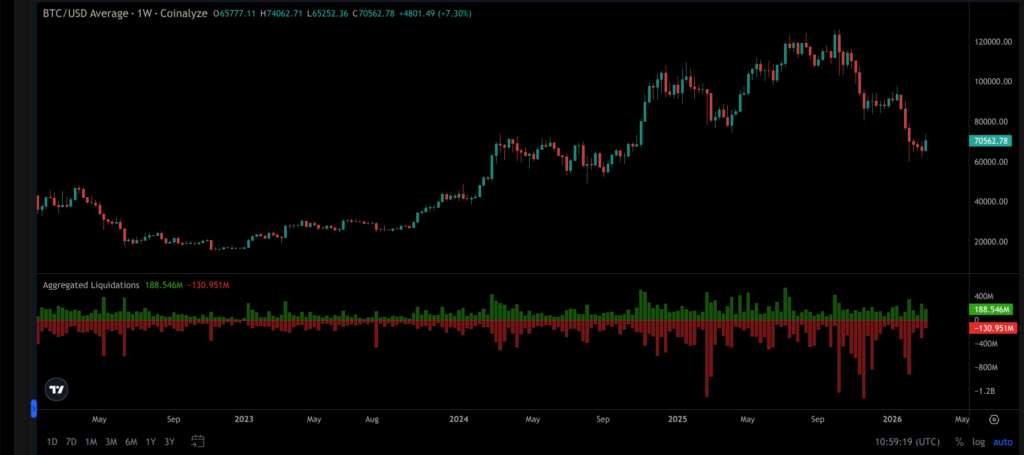
Many investors do not lose money because they choose bad assets. They lose money because they take on too much leverage relative to their capital. In highly volatile markets like crypto, even small price movements can trigger liquidations when leverage is high. For most investors, avoiding excessive leverage is one of the simplest and most effective forms of risk management.
Understanding the market is a form of risk management
One of the most underrated forms of risk management is simply understanding the market itself. Much of what we try to teach on this site ultimately relates to risk management.
Consider a simple analogy. If you place an inexperienced driver into heavy traffic, the probability of an accident is much higher than with someone who understands traffic and can anticipate situations before they happen. Markets work in a similar way.
When you understand why prices move and what scenarios are possible, uncertainty decreases. That allows a more analytical and controlled approach to investing. If decisions are based purely on narratives without understanding market structure, volatility will eventually punish that approach.
Expected value and long-term investing
If you understand the concept of expected value, you are already ahead of many investors. You do not necessarily need precise probability models. Even rough estimates can be enough if you focus on assets with strong fundamentals and deep liquidity. One of the reasons crypto markets have historically been attractive is that they are still developing markets. In many cases the potential upside has been significantly larger than the downside risk over long time horizons.
In other words, the game itself has had a favorable expected value. Nothing guarantees that this dynamic will last forever. But considering the current global economic structure and the ongoing development of digital assets, there are still strong reasons to believe the crypto market may continue to grow over time.
Final thought
Risk management is often misunderstood. Many people think it simply means placing stop losses or reducing position sizes. In reality it is much broader.
Risk management means understanding how markets behave, how volatility affects decision-making and how much capital should be allocated in different environments. Because in high-risk markets the goal is not to win every trade.
The goal is to stay in the game long enough for probabilities to work in your favor.
-MastertheEdge